
The TLC Dispatch: Curated June Articles
On patient work.

Revolutionary Greetings from the Learning Co-op!
Nadezhda Krupskaya remembered her husband Lenin’s work with the people during their time in exile:
“Ilyich had yet another method of studying the village. On Sundays he gave free legal advice. His reputation as a lawyer rose high after he had helped a gold-mine worker, who had been given the sack, to win his suit against his employer. The news of this success spread quickly among the peasants, and men and women came to Ilyich with their troubles. He heard them out attentively, went deeply into the matter and then gave his advice. Once a peasant came twenty versts to ask how he could prosecute his brother-in-law for not having invited him to his wedding, at which everyone had had a good time. “Will your brother-in-law treat you to a drink if you go and see him now?” “Aye, that he will.” Vladimir Ilyich wasted an hour, trying to persuade the fellow to make it up with his brother-in-law. Sometimes you couldn’t make head or tail of what they were talking about, and so Vladimir Ilyich always asked them to bring him a copy of the various papers in the case. Once a bull belonging to a rich farmer gored a poor woman’s cow. The volost court ordered the owner to pay the woman ten rubles. The woman refused to accept the decision and demanded a “copy” of all the evidence in the case. “What do you want, a copy of a white cow?” the assessor said, laughing at her. The enraged woman came running to Vladimir Ilyich. Sometimes it was enough for the wronged party to threaten to take his complaint to Vladimir Ilyich to make the offender give in.”
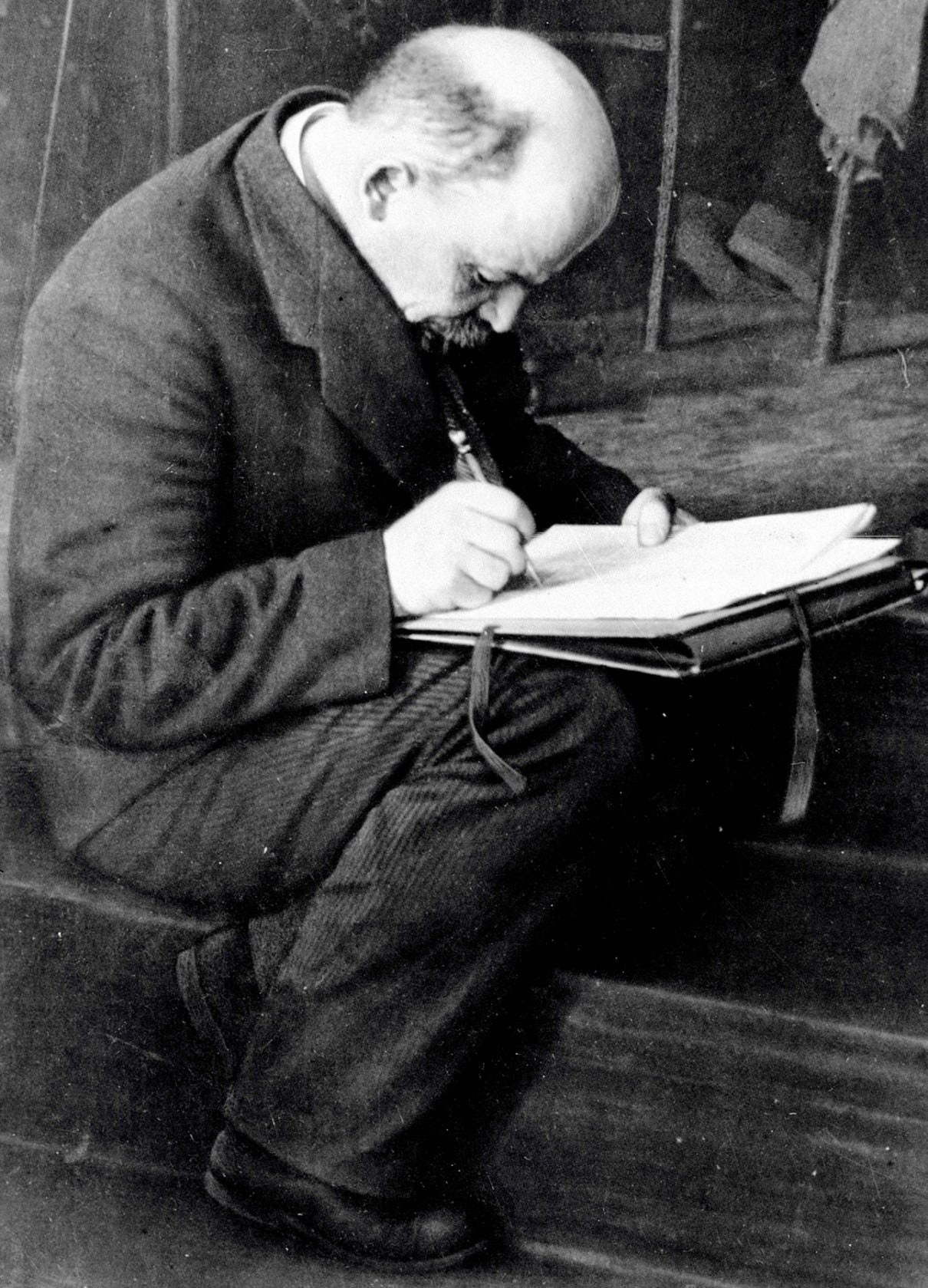
Revolutionary work is patient work. Revolutionary work is work with the people. At TLC we’re talking with several organisations around the world to find out how we can help them develop learning and teaching. In the past, we’ve worked with CATU, Captain Support, UVW, and ACTA. Does your organisation want to become a comrade-organisation to the Learning Coop? Get in touch with us and we’ll talk about how we can support each other.
This is our second free newsletter. The Learning Coop is committed to providing in-depth, rigorous analysis of the struggles that matter, but this work requires resources to remain independent and sustainable. Starting next month, our full monthly round-ups will be available to our subscribers for £5 per month.
By subscribing, you are directly funding our capacity to provide educational resources, and organisational support to our comrades. If you value this curation and our work on the ground, please join us as a subscriber.
June Round-Up
Here’s our round-up of writing on the Left in Britain, from the month of June. It’s a well-intentioned but entirely imperfect representation of the whole, and you can complain that we included this and not that, and that we’ve misunderstood the other, using this form.
Here goes!
On Palestine:
Linda Pentz Gunter interviewed Mustafa Barghouti for the Morning Star on the role of Palestinian struggle in global struggle, on Palestinian hostages, Israeli attacks on Palestine’s medical system, and BDS. Rachel Spence wrote an account for Red Pepper of recent trade union solidarity actions in the UK. Hannah Dahwa and Gerrard Vannar set out RS21’s 7-step strategy against Palantir in the NHS. RS21 interviewed Arms Embargo from Below who described the future of direct action and the roles of activity inside and outside the workplace.
Farah, Calico, and Noah gave an in-depth account of current Zionist land grabbing for Red Pepper. Brendan Ciarán Browne reflected on how his time living in Palestine challenged his understanding of human rights, legal frameworks, and sectarian violence in Ireland.
Declassified detailed arms trade deals between the UK and Israel, finding that imports of military products from Israel by the UK increased by ten thousand per cent during the Gaza war. Alex wrote about the allegiances and contradictions visible in the statements of Britain’s officer class. Jody McIntyre documented Andy Burnham’s links with Israel. The Ferret revealed the information they have been fighting to obtain for two years, on Angus Robertson’s meeting with an Israeli diplomat. Florence Open and Martin Ralph mapped how states have mounted legal repression against those supporting Palestine.
On Workers’ Struggle:
Peter Hunter outlined the progress of the sectoral bargaining framework for care workers in Scotland, arguing that the Scottish Fair Work model guarantees workers the right to elect, instruct and remove representatives for authentic collective bargaining, contrasting sharply with the UK Employment Rights Act which risks leaving English workers with a weaker, top-down mechanism resembling a pay review body. Dan Holland of EIS-FELA called on Scottish trade unions not to allow the Community Wealth Building agenda they have fought for to be co-opted by UK government proposals to establish Defence Technical Excellence colleges. George White advanced a Lancashire Unite Area Activist Committee strategy based on the M65 Corridor Zone, calling for cross-union collaboration with local lay activists to systematically unionize all workers junction-by-junction. Steven Ribble of RS21 called for the NEU’s strike proposal to go beyond funding and pay awards, and to fight for an end to austerity in England’s schools. Elaine Graham-Leigh questioned Unite’s commitment to a worker-led just transition.
Notes From Below released a full issue on Workers’ Inquiry. Their editorial argued that the process of completing a workers inquiry allows the subjective recomposition of the working class as an autonomous force which can undertake genuine mass self-organisation (as opposed to what Hal Draper called ‘substitutionism’) and organise work according to its technical knowledge. The editors described how to do a workers’ inquiry: examining the technical composition of a workplace (how labour is organised), the social composition (how labour is organised outside the workplace) and the political composition (how the working class is organised in struggle). Jamie Woodcock wrote about class composition theory, describing the three parts (technical, social and political) in terms of fixed and variable capital and reproduction, and gesturing towards Notes from Below’s view of the unpredictable ‘leap’ from technical/social composition to political composition. George Briley, Matthew, and Dante Philp provided historical examples of inquiry in England in Race Today, the Brixton Black Women’s Group and other women’s liberation groups, and Big Flame. Roberto Mozzachiodi addressed the role of ideology in workers’ inquiry, drawing on letters between Althusser and Maria Macchiocchi which suggested how a militant outside a workplace and a worker inside it might co-construct an understanding of what is happening.
On The Far Right:
Chris Bambery wrote about the link between the far right and Loyalism in the north of Ireland, central Scotland, and Merseyside. Richard Seymour saw more links to white ethnonationalism than loyalism in the Belfast and associated riots. Stathis Kouvelakis argued that the rise of the radical right has been driven by the authoritarian decay of neoliberalism and the left’s abandonment of the working class, and that our response should be a mass politics that learns from the success of La France Insoumise, Zohran Mamdani, and to some degree the Greens: avoiding the sectarian isolation of the ‘Third Period’, harnessing the working-class solidarity of the United Front, and rejecting the fatal moderate compromises of the Popular Front. Paul Demarty wrote for the Weekly Worker that the response to Henry Nowak’s murder indicated that the left was in a defensive mode, having failed to maintain an explicit revolutionary distrust of the state. The Morning Star encouraged people in England to get involved in housing campaigns, since catastrophic housing policy will provide the next issue for the far right to mobilise around. Raman Mundair and Deviji RM Jaan wrote that the widespread labelling of the Edinburgh attacks as ‘Islamophobic’ was a way to avoid reckoning with racial structures, and by extension the elements of empire, migration, national identity, and ideas of belonging that are at the root of the rise of the right. Lotte and Dan outlined the very initial stages of a process of area-based inquiry they undertook in Great Yarmouth, hypothesising that finding shared material concerns at the points of production and reproduction might build class-based affinities which could resist the far right.
On Party:
‘Les. P. Litts’ complained in Prometheus that Very Online activists leaving Your Party are putting forward written proposals for ideal party forms, while failing to consider how to engage the broader Left, particularly those who already left Your Party. Carla Roberts outlined in the Weekly Worker some ongoing problems with democracy in Your Party.
Mike MacNair wrote for the Weekly Worker against the Trotskyist elevation of political line, instead calling on the left to refocus on the democratic procedures of decision-making, which are necessary to realise the proletarian drive to collective activity. In the second part of the same series, MacNair fought against those who make overstated claims of the necessity for urgency or seizing the moment, which stand in the way of those democratic and educational processes which allow sufficient time for collective deliberation and decisions.
In Geese Magazine, Ewan Tilley argued against substituting political form for material analysis - critiquing Jodi Dean’s voluntarism, Mike MacNair’s programmatic idealism, and strategic moralism - and instead advocated using class composition analysis to build a party form that reflects the actual stratification and existing organization of the working class. L. Luria criticized Tilley’s overly broad conception of the working class, saying that the logistical-distributive sector is currently the only faction represented by communism in the UK - a status derived from its control over capitalist chokepoints, reflecting the positional leverage central to the Operaismo tradition that Tilley briefly referenced. In a follow-up, Luria fleshed out the economic theory behind this claim, arguing that logistics has positional leverage since it is the actual point at which domestic labour qualitatively interfaces with the circuit of valorisation. Lyra S argued for unapologetic true vanguard leadership, and the Party as a product of the real unity of the class-for-itself rather than a force instrumentalised to unify the class-in-itself.
On History and the Present:
Beauty Dhlamini reflected on the meaning of the Soweto uprising for young South Africans today, and the necessity to live up to the legacy of the Soweto militants in pan-African struggle against nativism and xenophobia. Mike Arnott reminded us to celebrate the role played by the men and women who fought fascism in Spain, many of whom had already fought the Blackshirts on their own streets. Tony Fox echoed these sentiments and investigated this connection in the Morning Star. Cailean Gallagher wrote about Dick Gaughan’s thoughts on timing, the head, and the heart in radical folk music. Gemma Smith wrote wide-ranging reflections on people’s alienation from their culture and history, based on Jim Hunter’s The Making of the Crofting Community. Ian McNiff recorded the after-effects of the Calton Weavers’ Massacre on the Calton and on his own life.
The Sports Section:
Carl Collins explored the contradictions of the working-class culture of football and its capitalist appropriations, and in a later article the geopolitical elements of football. For Tribune magazine, Richard Heller and Peter Oborne unearthed the history of radicalism in cricket.
Also in the Month of June:
Thomas Glasman interviewed Danièle Obono of La France Insoumise for Tribune, covering LFI’s increasingly fractured relationship with the New Popular Front, and their strategy to combine anti-racism with social and economic demands.
Christophe Domec interviewed La France Insoumise MP Jerome Legarve for the Morning Star, about LFI plans to resist increased military spending in France.
Talal Hangari argued that the Left should take a critical view towards wealth tax proposals.
The Full Marx Group at the Marx Memorial Library argued against Universal Basic Income and in favour of Universal Basic Services.
Jonathan Shafi wrote that the demise of Starmer shows the absence of a galvanising thesis and a unifying strategy for the future of British capitalism.
Lyra S hoped that the ruthless forces of global capital will completely obliterate Britain’s traditional working class to forge a new proletariat which is capable of true revolution.
Mike MacNair argued that Tony Blair’s plans to revive the British economy through substantial downward pressure on the wage share will at most result in a temporary increase in profitability.
Lyra S’s polemic on gender dismantled a current debate on masculinity in the pages of Geese Magazine, arguing that gender is a material relation of Capital which should be wholly abolished.
Jukka Seppälä challenged the Scottish nationalist tendency to describe Finland and the other Nordic nations using a classless discourse with no explanatory power, which ignores the rightward turn in these nations to neoliberalism, austerity, and Atlanticism.
And that’s a wrap!